How big do they get?
| Sex | Height (at withers) | Weight |
|---|---|---|
| Males | 20 to 23 inches | 42 to 60 pounds |
| Females | 17 to 21 inches | 35 to 50 pounds |
Do they shed?
PWDs are hypoallergenic, right?
Portuguese Water Dogs are considered to be hypoallergenic because they are single-coated and shed less than double-coated breeds. Other single-coated, non-shedding breeds include the Bedlington Terrier, Bichon Frise, Irish Water Spaniel, Kerry Blue Terrier, Maltese, Poodle, Schnauzer, and Soft Coated Wheaten Terrier.
To be "hypoallergenic" is to have a decreased tendency to cause allergies. There is no such thing as a non-allergenic dog. Hypoallergenic dog breeds (single-coated or hairless) will still produce allergens, but because of their coat type will typically produce less than others. People with severe allergies and asthma will likely still be affected by a hypoallergenic dog.
Coat color has nothing to do with a dog's hypoallergenic quality.
Most people who have allergic reactions aren't allergic to the coat so much as to the dander, the bits of skin that come off the dog with the shed hair. PWDs have less dander which, along with the saliva, are the substances most people with allergies react to. But their thick, long coats can pick up pollen and dust from outdoors.
If you have severe allergies it is suggested that you spend time with adult PWDs before getting one. Many people are allergic to Portuguese Water Dogs, so please be careful. Spend time with the breed before bringing one into your home as a family member.
For more information about owning a dog if you have allergies, read this article by Stephanie Gibeault, MSc, CPDT.
Are they good with children?
Things to keep in mind:
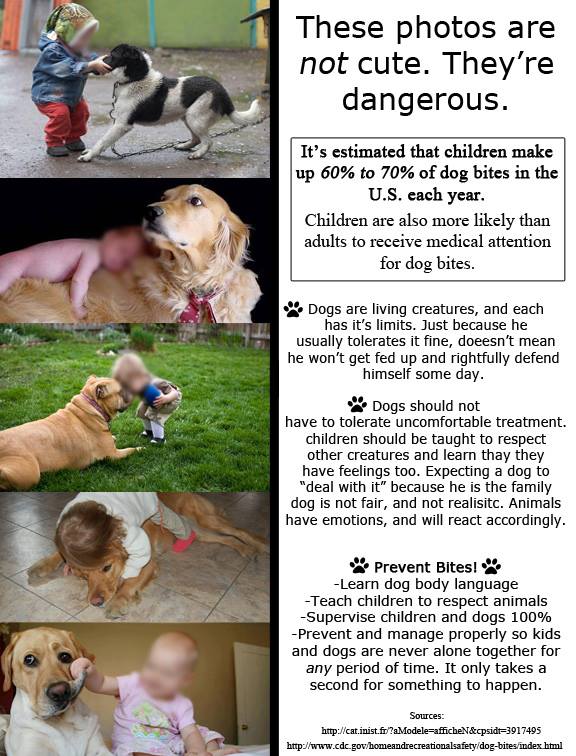
- Children need to be taught how to interact with a dog.
- Rules need to be set for the children and the dog, and strictly enforced.
- Learn to recognize the signs of a dog's distress and move children away from your dog when it demonstrates any of those signs. There is always a potential for a bite if a child does something the dog finds painful or threatening.
- A dog should never be adopted or purchased for a child. It needs to be an obligation that is taken on by the whole family. The children can assist, but they are not the primary caregivers. This is a parent's responsibility.
The scenes depicted in this image are NOT cute - they are DANGEROUS.
What are the main differences between male and female PWDs?
I've heard that PWDs are high energy dogs that can be difficult pets. What can a PWD owner do?
Why are PWDs so expensive?
PWDs, like many other breeds whose popularity has risen, are often quite expensive. In the USA, the typical price for a young PWD puppy ranges from $2500 to $3000. Older puppies and adults are usually less.
We advise being wary of anyone selling PWD puppies for a lot less than the norm as that might mean the litter's parents have issues, or that a puppy mill situation exists. If a breeder has lowered a puppy's price due to a specific stated reason, you can make an informed decision as to whether you wish to purchase the puppy. But if no expanation is given for a lower than normal price, it would be wise to look elsewhere.
Conversely, just because a puppy's purchase price is around the typical asking price or more doesn't mean that the puppy's breeder is a responsible one. Which brings us to the next question -
How can I tell whether a particular PWD breeder is a good one?
- Enter their show prospect PWDs in conformation dog shows to see whether they have the "right stuff" to get their championship. The show ring is the venue for determining to what degree a dog conforms to the standard for its breed.
- Obtain all PWDCA recommended health tests on their breeding prospect dogs. These tests cost multiple hundreds of dollars, but the results help a breeder determine which PWDs would be suitable mates. (Unsuitable matches can result in dead or unhealthy puppies.)
- Only breed dogs that are suitable mates based upon the existing genetic health tests. In addition, they will not breed a PWD unless s/he gets a passing OFA hip rating at 2 years of age.
- Provide a healthy, rich, environment for the puppies - preferably in the breeder's home (rather than a separate building or kennel), where the puppies will benefit from ongoing interaction.
- Have their puppies extensively checked over by their veterinarian, micro-chipped and given their first series of puppy shots.
- Screen prospective new owners very carefully. If a breeder doesn't ask many questions about you or your family and seems in a big hurry to "sign you up", that should be a red flag. Another warning sign is a breeder who downplays the more challenging aspects of the breed, assuring you that PWDs are great dogs for everyone.
- Select a puppy for the new owners based upon the suitability of the puppy's temperament for the family, as well as the family's stated preferences.
- Use stringent criteria to determine which puppies are show/breeding quality, and will require that the rest be spayed/neutered after they are the proper age (this age does vary from breeder to breeder).
- Provide a written contract for each puppy they place, and give potential owners an opportunity to review this contract before making a purchase.
- Send puppies to their new homes only after they are at least eight weeks of age.
-
Provide the new owner with a take-home puppy information folder, printed and/or digital, containing the following:
- Instructions on feeding, training, care and grooming, as well as basic information about the breed
- The puppy's health and vaccination records to date
- Copy of the parents' health test results (see above)
- Copy of the puppy's pedigree
- Provide an AKC Registration Application form to send to AKC, or have the new owner sign it and send it in themselves. (If the breeder chooses to wait until after receipt of spay/neuter proof, this should be documented in the sale contract.)
- Always take one of their dogs back if it needs to be surrendered by the owner.